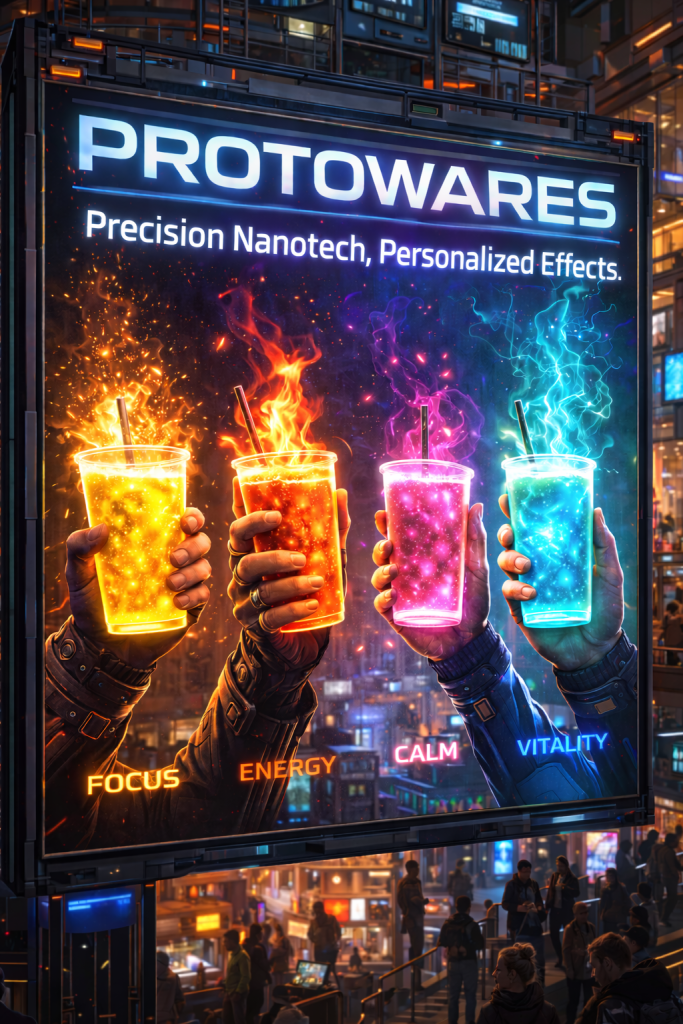
Protowares never chased NeuroCorp head-on.
They didn’t build towers or flood the skyline with promises. No skybridges, no holographic gods whispering about transcendence. While NeuroCorp poured everything into NeuroBliss—one product, one controlled experience—Protowares slipped into the gaps the city forgot to police.
The Neon Labyrinth was perfect for that.
Their first stores were barely recognizable as retail. Narrow storefronts wedged between synth-food counters, repair stalls, and flickering arcades. Asymmetrical interiors shaped by whatever space was available. No grand entrances. Just light, motion, and a quiet hum of refrigeration units filled with glowing drinks.
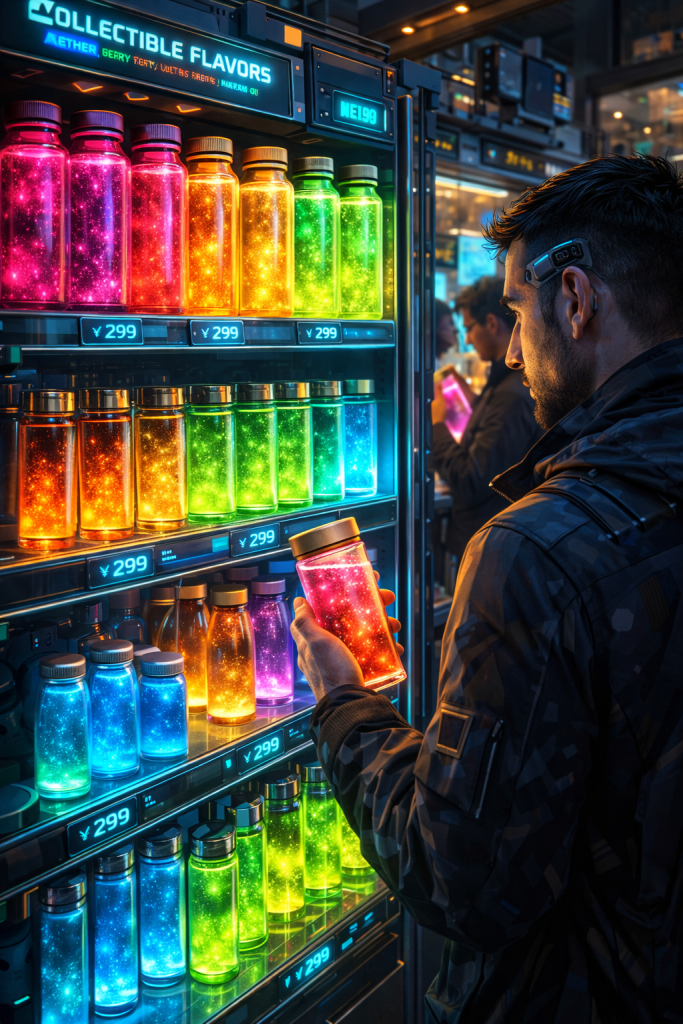
Protowares didn’t sell bliss.
They sold precision.
Each drink was nanotech-driven, tuned for a specific state: heightened focus for couriers threading impossible routes, physical recovery for factory workers who couldn’t afford downtime, emotional leveling for people carrying too many memories into the night. The effects were clean, time-boxed, and honest. No emotional overwrite. No lingering haze. Nothing that claimed ownership of the user.
In a city tired of being owned, that mattered.
Where NeuroBliss promised transformation, Protowares promised control. The choice wasn’t what kind of person you’d become—it was what you needed to get through the next few hours. The containers themselves reflected it: effect timers glowing faintly at the base, nanoclusters visibly degrading as the drink ran its course.
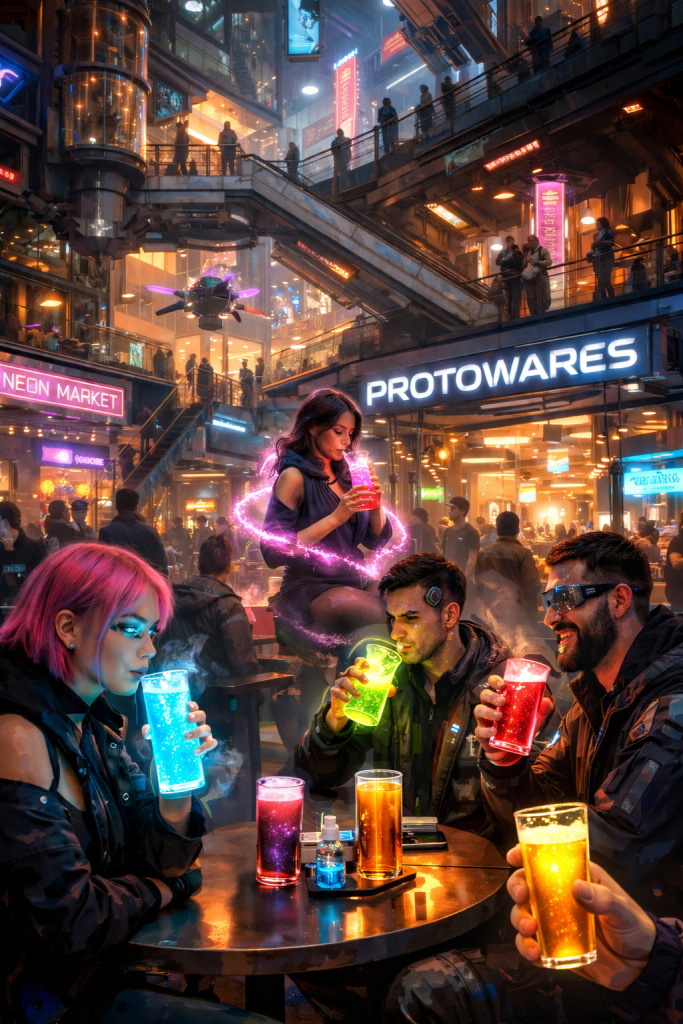
No mystery. No devotion.
The Labyrinth embraced them fast. Each shop adapted to its block, its crowd. Some leaned cerebral, others physical, some specialized in stabilization—quietly helping users step down from NeuroBliss without saying the name out loud. Protowares never attacked NeuroCorp publicly. They didn’t have to.
NeuroCorp noticed when numbers shifted.
Not in the Spires. Not among executives or investors. But among couriers, night medics, market runners, security contractors—the people who kept the city moving while corporations slept. NeuroBliss wasn’t losing dominance. It was losing trust.
Protowares didn’t feel like a system.
It felt like a tool.
And in the Neon Labyrinth, where systems failed constantly and survival came down to small advantages stacked night after night, that difference was everything.
Protowares didn’t promise a better future.
They just helped people survive the present—quietly, locally, and one glowing drink at a time.
 Cyberpunk City AI
Leave a comment