The rain never falls hard in Verdant Verge.
It drifts. Like the city itself is breathing.
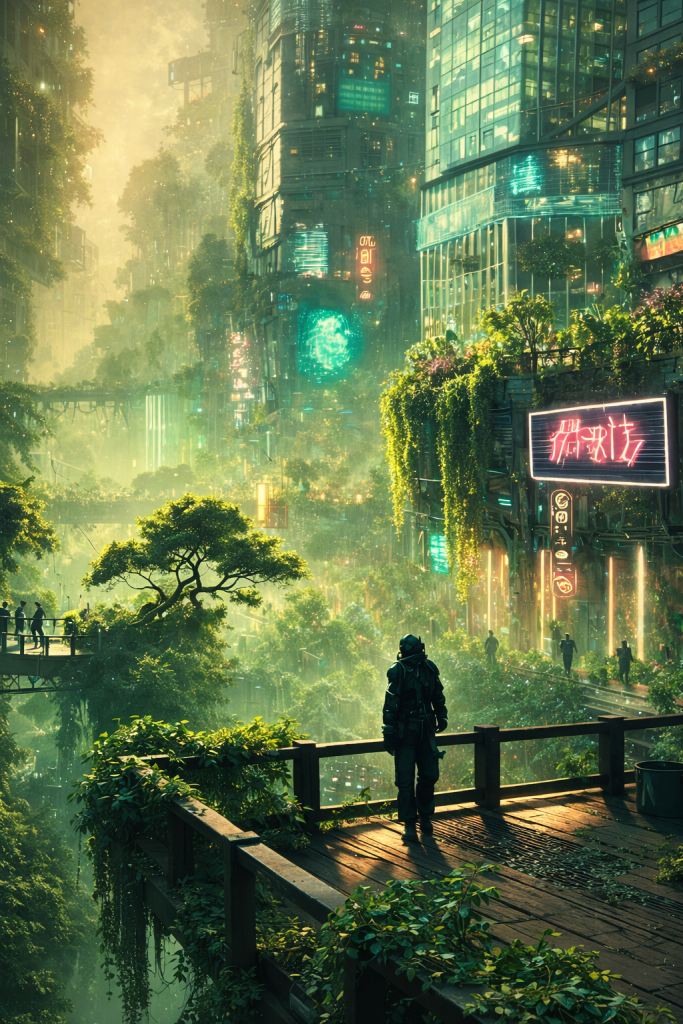
He stands at the edge of the overlook, boots damp against the moss-slick wood, watching the city wake beneath layers of green and glass. Towers once owned by corporations now wear vines like quiet trophies. Old neon signs still flicker through hanging ivy, advertising things no one remembers how to buy anymore.
Verdant Verge was never meant to exist.
It started as a protest—seed bombs lobbed onto rooftops, hacked irrigation systems, illegal soil shipments smuggled up freight lifts at night. The Naturas called it reclamation. The corporations called it vandalism. Time called it inevitable.
Now the city grows here on its own terms.
Below him, elevated walkways snake through canopies of engineered trees. People move slowly, deliberately—farmers tending rooftop plots, couriers weaving through mist, couples pausing just long enough to feel the warmth of filtered sunlight. You don’t rush in Verdant Verge. The air won’t let you.
The figure exhales, helmet visor dimming as condensation beads and slides away. He remembers when this place was all steel and shadow. When the same overlook faced a dead drop into traffic and smog, when the only green you saw was a corporate logo glowing ten stories high.
A soft chime hums nearby. One of the old signs still works—pink light bleeding through leaves, letters half-swallowed by vines. The city didn’t erase itself here. It adapted. That feels important.
Something moves in the mist—a child laughing, a drone-pollinator buzzing low, the creak of living buildings adjusting to the wind. Life, layered over life, refusing to be clean or simple.
He rests his hands on the rail and lets the moment stretch.
Verdant Verge doesn’t promise salvation.
It promises coexistence.
Steel and soil. Memory and growth.
And for the first time in a long while, looking out over a city that chose to heal instead of replace itself, he believes that might be enough.
 Cyberpunk City AI
Leave a comment