They used to count time by power outages.
In Iron Alley, the lights never fully went out—they just flickered, stuttered, came back weaker. Neon signs buzzed like dying insects, and rainwater pooled in the cracks of rusted walkways. That was where they met: two people leaning against the same malfunctioning vending unit, waiting for it to spit out something warm enough to pass as food.
Back then, their apartment was a single room stacked between old transit pylons. The window didn’t open. The air smelled like coolant and fried circuitry. At night, they lay awake listening to gang bikes scream past and corporate drones hum overhead, promising futures meant for someone else.
What they did have was time, stubbornness, and one shared idea.
They noticed what Iron Alley always lacked: things that lasted.
Most people patched problems with cheap parts and cheaper labor. Repairs failed in weeks. Systems overheated. Plants died under artificial lights that were never meant to nurture life. So they started small—fixing broken climate units, rewiring grow lamps scavenged from abandoned warehouses, building hybrid tech that could survive grime, heat, and neglect.
Their first “shop” was a folding table near the night market. No sign. No brand. Just a hand-painted slate that read:
Sustainable fixes. No corporate lock-in.
They repaired air scrubbers for alley kitchens, converted trash-level LEDs into low-power grow arrays, and taught neighbors how to keep rooftop plants alive despite acid rain and rolling blackouts. Payment came in CyberTokens, old components, sometimes just food—but word spread fast.
Iron Alley respected two things: reliability and loyalty.
Within a year, they had a real space—still cramped, still loud—but theirs. They named the business Verdant Circuit, half joke, half aspiration. They refused contracts from corporations that demanded exclusivity. They hired local kids, taught them soldering, systems logic, and plant care in the same breath.
Their breakthrough came quietly.
A Verdant Verge collective heard about them—engineers who could merge bio-growth systems with obsolete city infrastructure. No glossy pitch. No venture capital. Just proof: Iron Alley buildings that breathed easier, stayed cooler, grew food where concrete used to crack.
The contract didn’t make them rich overnight. It did something better.
It made them stable.
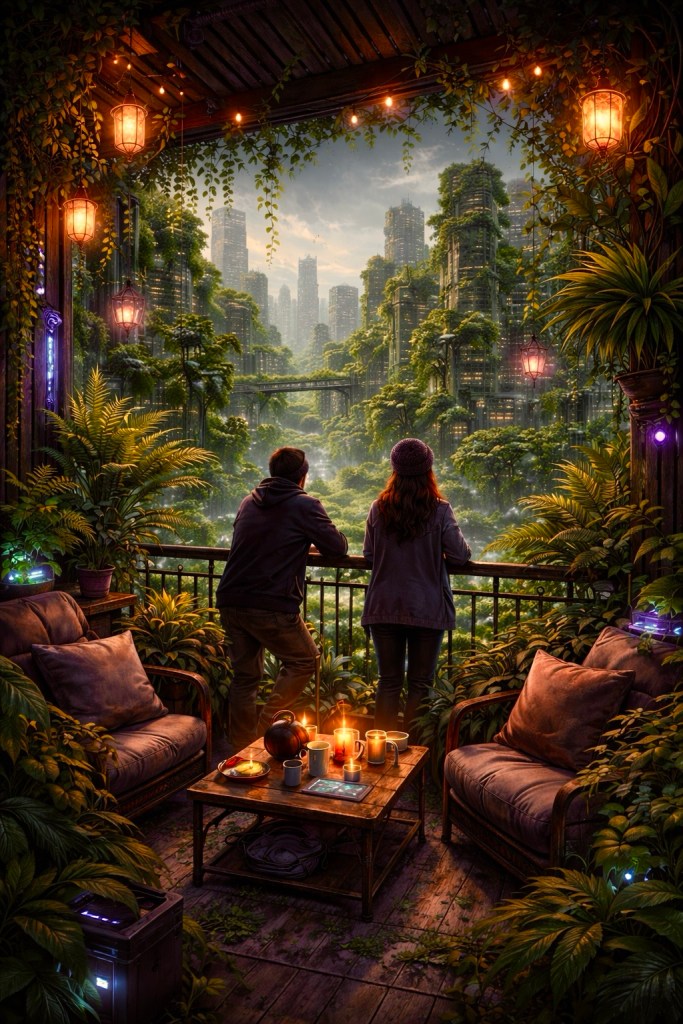
Now they stand on this balcony, wrapped in hanging vines and soft lantern light. Below them, Verdant Verge stretches out—towers softened by green, walkways threading through canopies, a city that finally learned to slow down. The air smells like rain and leaves instead of ozone.
Between them sits a small table. Tea steaming. A tablet glowing with tomorrow’s orders—custom systems for low-income districts, scaled pricing, community-first builds. They never forgot Iron Alley. They still return every week.
They didn’t escape by abandoning where they came from.
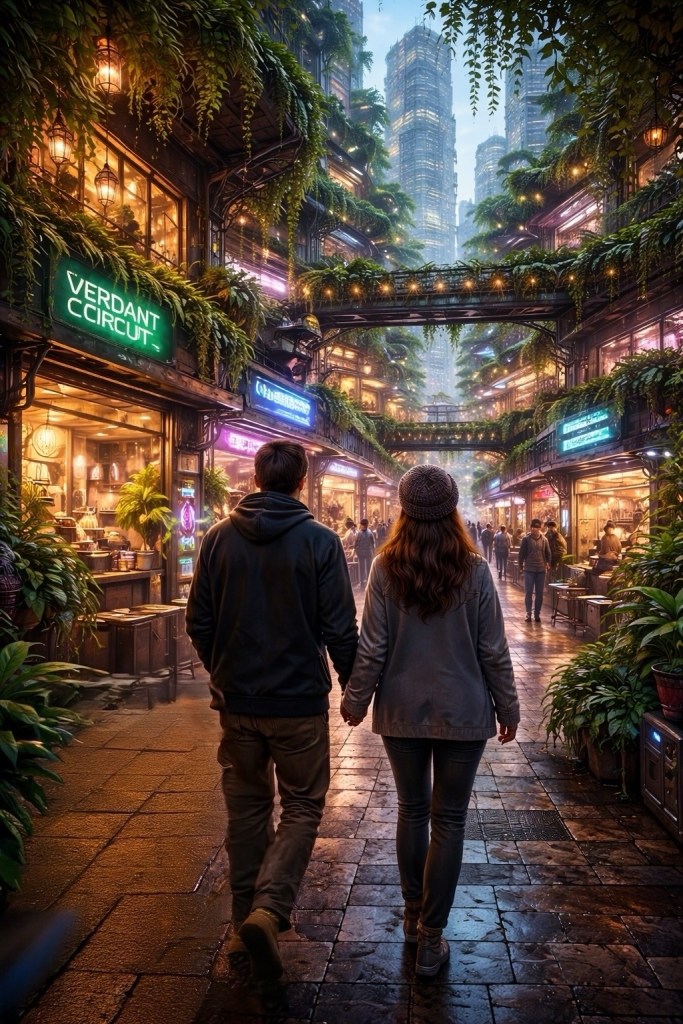
They escaped by proving that even in the hardest place, something sustainable could grow—if you built it with care, and refused to let the city decide your worth.
Above the noise.
Above the flicker.
Still grounded.
 Cyberpunk City AI
Leave a comment