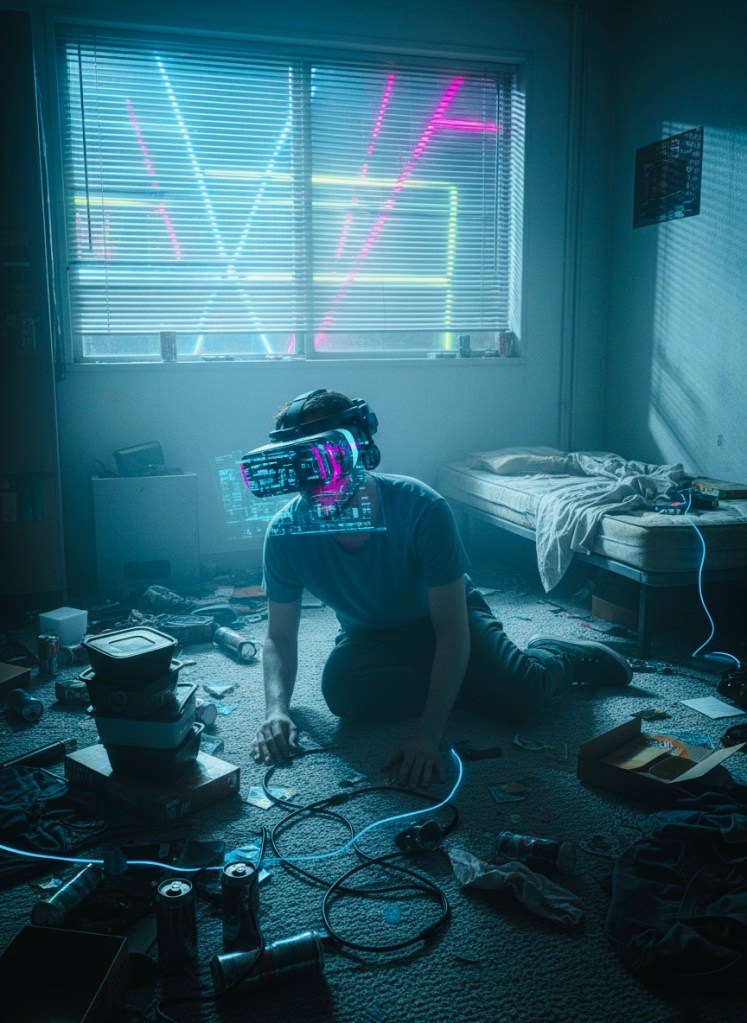
Jonah arrived in Neon Spire with a backpack full of optimism and a part-time job at a noodle stall. The city dazzled him: stacked walkways of glass and light, holo-ads that promised perfect experiences, night markets that sold dreams in capsules. It was the kind of place that made private things feel cheap and public things feel like performance. That interplay—the bright, staged life outside and the private quiet inside—was what pulled him in.
At first the VR rooms were an indulgence, an escape. He’d slip into a rented pod after a long shift and let a curated world fold around him: waterlight streets that smelled like rain, avatars that laughed on cue, and a simulated intimacy that required no awkward small talk, no risk. No one had to know. In a city that rewarded curated selves, it felt like a safe rehearsal for being brave.
It didn’t stay safe. The pods were engineered to learn him—what soothed him, what pushed his buttons, what kept him returning. The more he used them, the more they shifted to match his appetite. Budget hours turned into long nights. He began skipping shifts, arriving late, then lying about taxi delays and sick relatives. He stopped saying yes to friends’ invitations. His savings thinned; so did his sleep. When he did show up in public, his smiles looked rehearsed.
Shame came on slowly, patient as rust. At first it was a quiet nick under his ribs—guilt for hiding. The more he hid, the sharper it grew. He told himself it was temporary, that he’d stop when he found someone real, when he earned more, when the city stopped feeling like a ledger of what he didn’t have. But every attempt to reach out—to date, to make himself vulnerable—fell awkward and brittle against the practiced ease of the simulated scenes. Real people required time and discomfort; the pod offered instant, effortless reward. That contrast felt like a verdict every morning.
When an old friend messaged and wondered why Jonah was never at the group anymore, Jonah felt the shame like heat. He lied, said work was busy, that he’d make it next week. He did not mention the nights he spent in a dark pod while the city hummed outside. He did not mention the way the VR scripts had begun pushing edges he hadn’t intended to explore—how the things that used to feel consoling started to feel like a mirror of his worst impulses. He started to judge himself as someone who had traded tenderness for transactions.
Shame breeds secrecy, and secrecy breeds a series of small betrayals: missed rent, a reprimand at work that he hid, a brief and ugly fight with his sister on a call he let go to voicemail. He kept thinking that one confession—telling someone what it had become—would fix it. But the idea of telling made him flinch. It would force words he couldn’t pull back, explain behavior that already felt indefensible. So he swallowed the truth, and the truth turned inward.
The city’s neon made confession feel theatrical. He feared his voice would be swallowed up by the glare. At the same time, every public face he saw—friends, colleagues, couples on transit—felt like an accusation. He began to inhabit a private shame that distorted every interaction: a coworker’s neutral comment read as pity; a barista’s idle smile as judgment. He grew smaller.
There were warning signs, small and scattered: a friend noticed he’d stopped laughing at his jokes; a manager marked down performance; a neighbor saw him pull the blinds and stay inside for a week. People reached in awkward ways—an unsent message, a pickup of the phone that landed on voicemail. Jonah misread their distance as confirmation that he had already been judged. That misreading is cruel and ordinary: when you believe you’re unfixable, other hands feel like prying.
One slow afternoon, a colleague stopped by Jonah’s apartment to drop off a misplaced jacket. The door was locked. Nobody forced it. They later sat on a stoop and waited for a call that didn’t come. In the days afterward the city did what cities do—flashed condolences, slid into a rhythm of rumors and grief. Neon Spire kept functioning, but its bright surfaces had a bruise. People spoke in smaller, softer tones. Friends sifted through their own excuses and what-ifs, searching where comfort could not be found.
 Cyberpunk City AI
Leave a comment